GSA Caelune-1
FAMILY-CLASS REUSABLE EXPLORATION SPACECRAFT
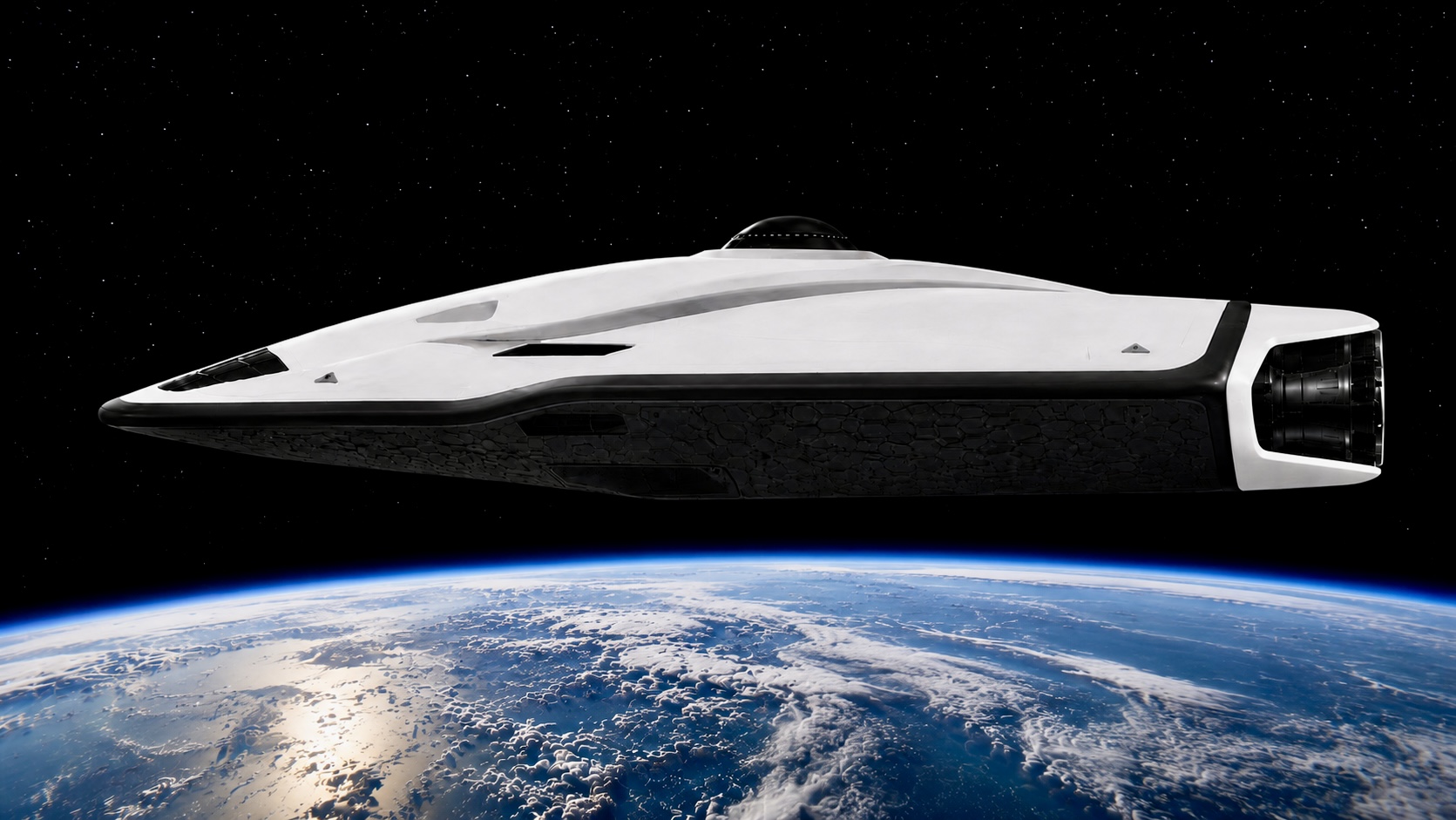
GSA Caelune 1 is a conceptual reusable multi-environment spacecraft designed for an era in which spaceflight becomes more than transportation between missions. Caelune is designed to serve simultaneously as a spacecraft, planetary lander, mobile habitat, exploration platform, and long-duration home for a small crew or family. Its architecture combines autonomous flight intelligence, reusable methane propulsion, layered structural shielding, integrated surface operations, redundant life-support systems, and a highly habitable three-deck interior. Rather than treating human occupants as payload, Caelune is designed around them.
Case Study Title

Share information on a previous project here to attract new clients.
Provide a brief summary to help visitors understand the context and background of the work. Add details about why you created this project and what makes it significant.
Case Study Title

Share information on a previous project here to attract new clients.
Provide a brief summary to help visitors understand the context and background of the work. Add details about why you created this project and what makes it significant.


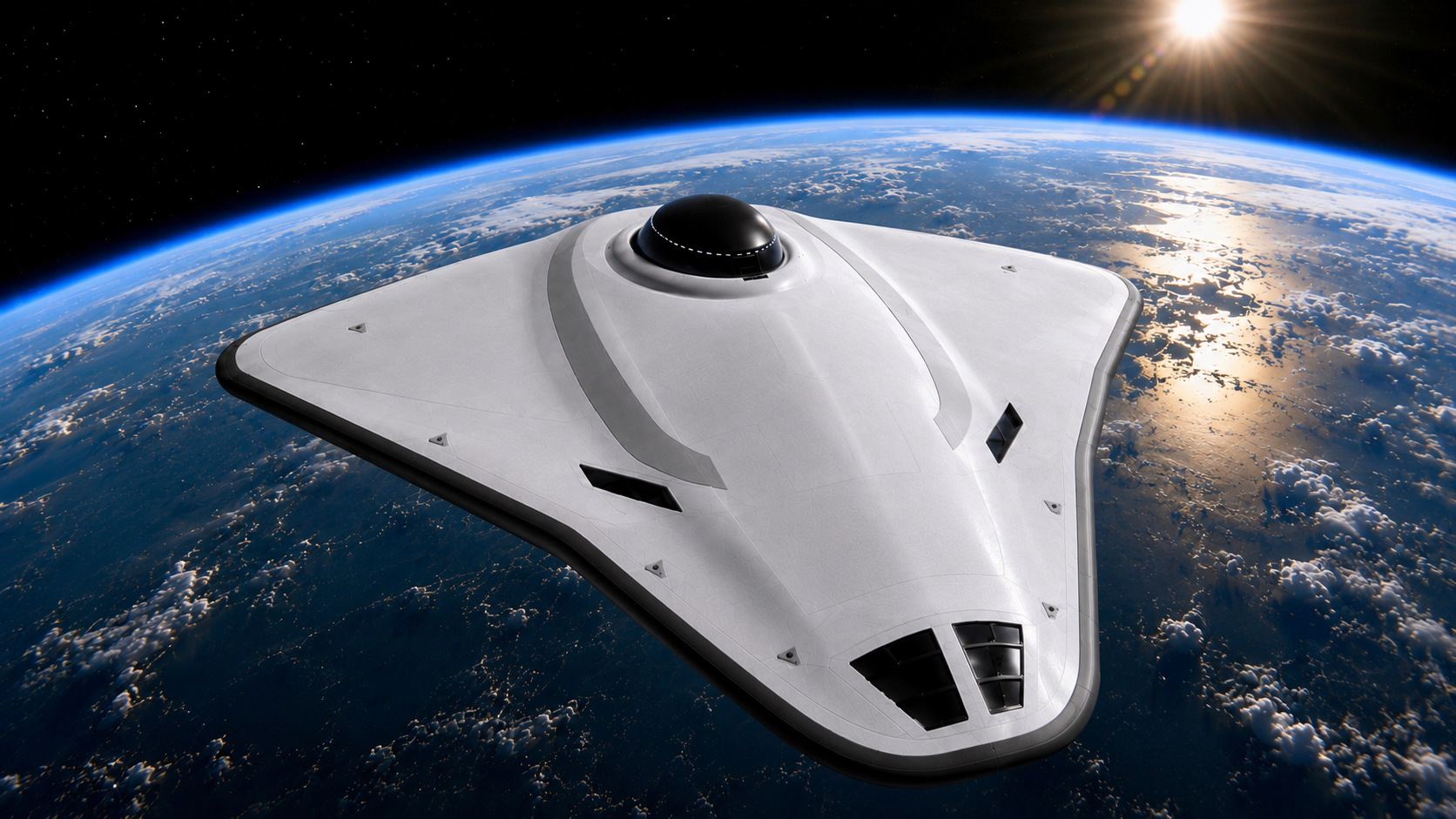
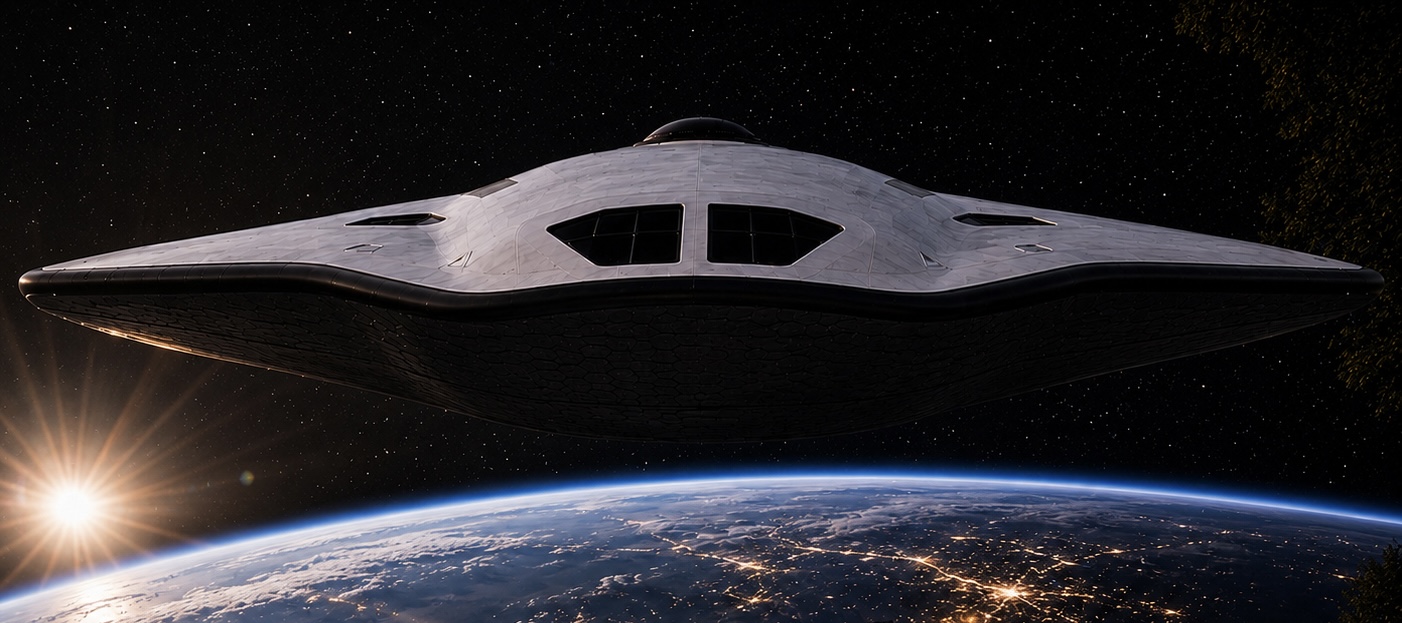
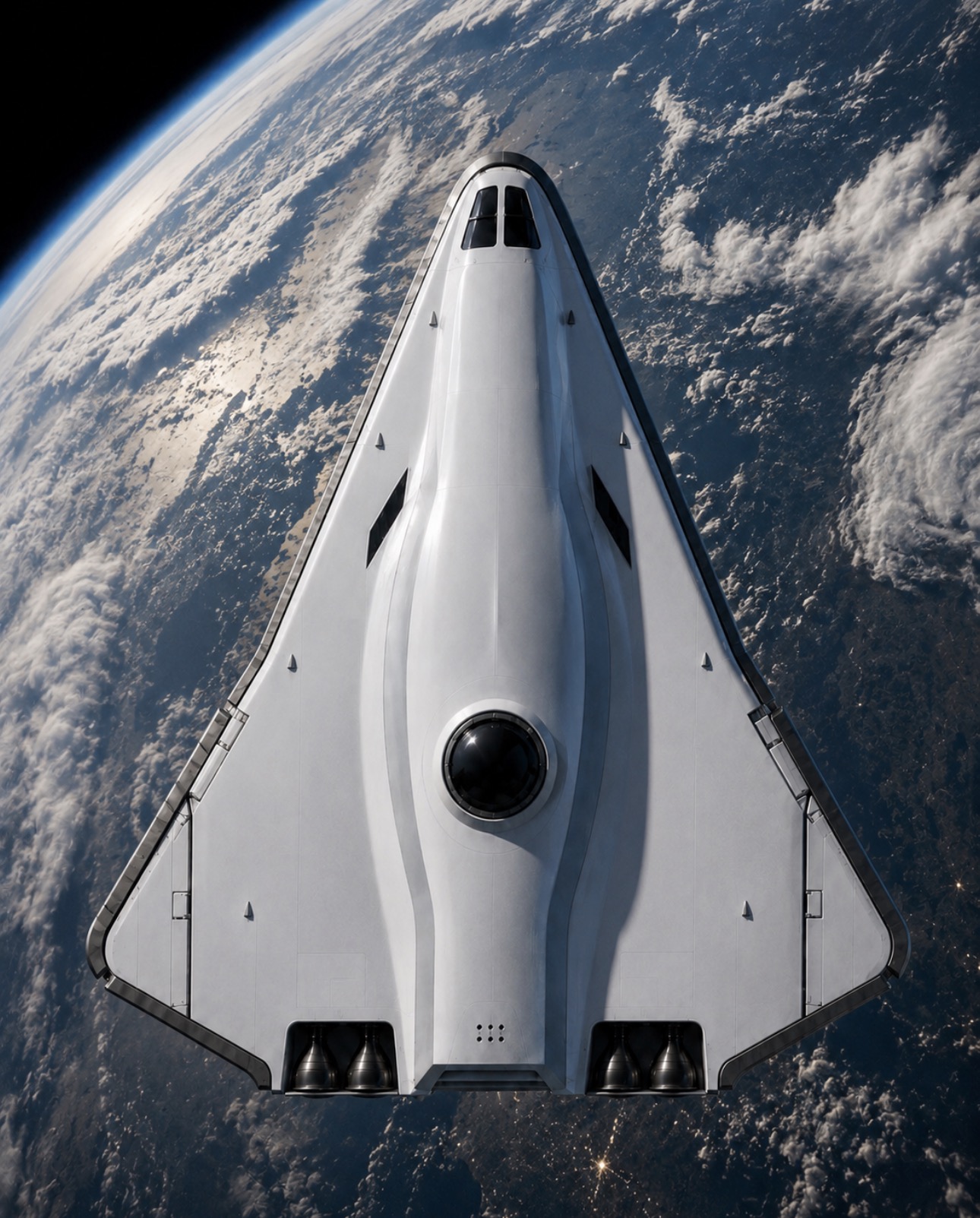
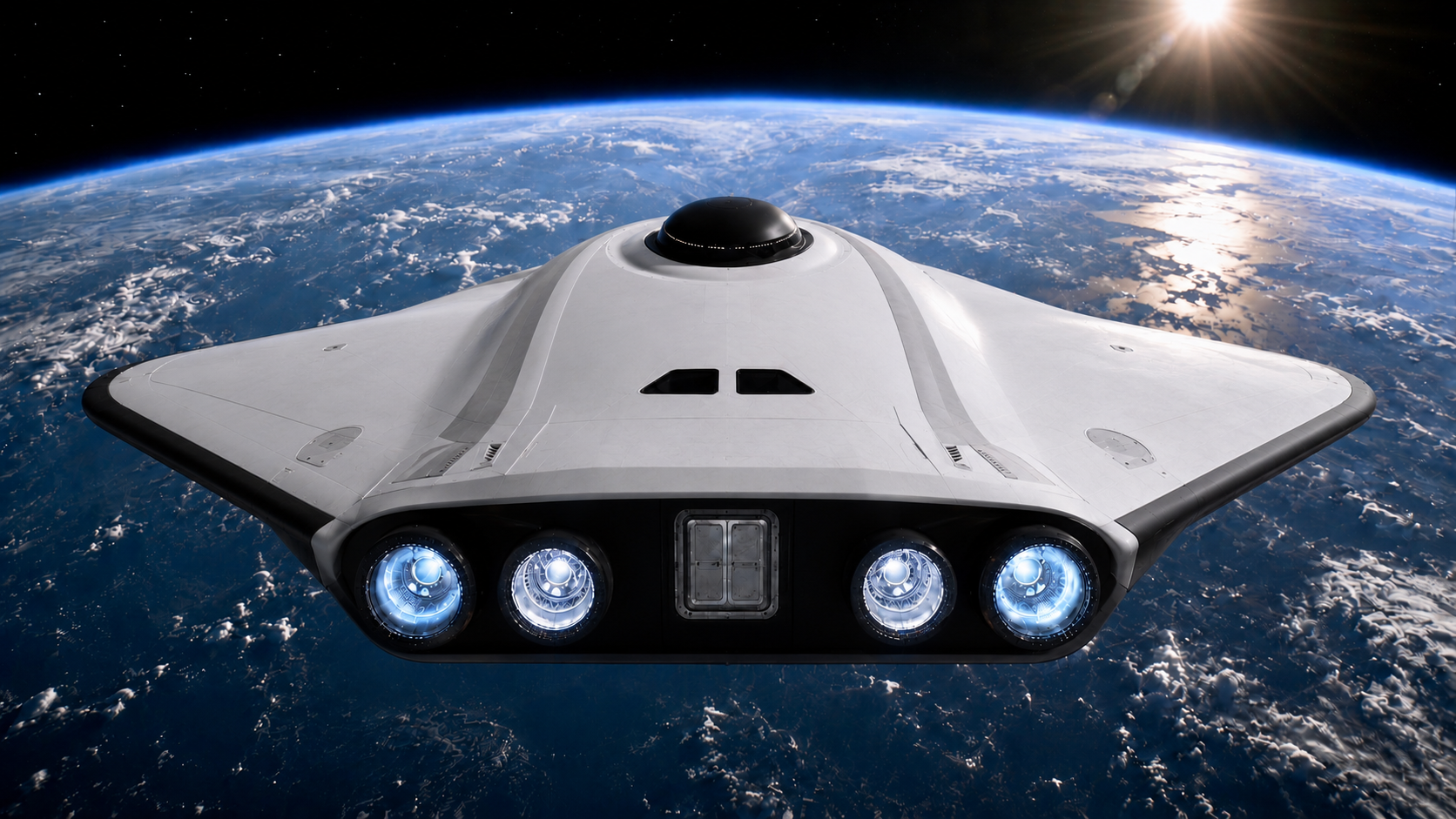
About GSA Caelune-1
Vehicle Overview
Vehicle Name: GSA Caelune 1
Vehicle Class: Family-Class Reusable Exploration Spacecraft
Concept / Design: Greg Stanley Aerospace
Configuration: Three-deck integrated lifting-body spacecraft
Primary Propulsion: 4 × Methane Hybrid Multi-Component Engines
Landing Configuration: Retractable VTOL propulsion and four retractable landing assemblies
Flight Architecture: Autonomous AI-assisted flight with full crew command capability
Primary Role: Orbital, lunar, cislunar, planetary, and long-duration crew transportation
01 | PURPOSE & MISSION
Caelune explores what personal spacecraft could become when human spaceflight moves beyond temporary missions.
Rather than transporting a crew to another vehicle, habitat, or destination-specific lander, Caelune is designed to remain with its occupants throughout the mission. The spacecraft could launch from Earth, enter orbit, rendezvous with orbital infrastructure, travel through cislunar space, conduct surface operations, return to orbit, and ultimately return home. Its role combines several traditionally separate systems:
Crew Transport: Long-duration transportation for a small crew or family.
Orbital Operations: Rendezvous, docking, station keeping, research, and independent orbital missions.
Cislunar & Lunar Exploration: Transportation and operational support between Earth orbit, lunar orbit, and the lunar surface.
Surface Habitat: A protected living and working environment after landing.
Exploration Platform: Support for scientific equipment, robotics, surface vehicles, and expedition operations.
Emergency Transportation: Independent mobility and life support provide options during contingencies away from Earth.
The objective is not simply reaching another destination. It is giving people a spacecraft capable of staying with them when they arrive.
02 | VEHICLE & STRUCTURAL DESIGN
Caelune uses a broad lifting-body architecture designed to provide substantial internal volume while maintaining a relatively shallow vertical profile and low center of gravity. The upper command structure transitions into the main hull and wing architecture, allowing the body, wings, pressure vessel, propulsion systems, and internal decks to function as a unified spacecraft.
Exterior Architecture
The vehicle incorporates:
-
Aerodynamic white upper surfaces
-
Dark thermal-protection surfaces
-
Integrated wing and lifting-body geometry
-
Forward flight windows
-
Observation windows
-
Protected aft propulsion
-
Recessed RCS thrusters
-
Retractable VTOL assemblies
-
Retractable landing gear
-
Lower cargo and vehicle access
Primary Structural Hull
The conceptual load-bearing architecture may combine:
-
Aluminum-lithium alloys
-
Carbon-fiber composites
-
Titanium structural members
-
Aramid reinforcement
-
Advanced ceramic composites
Different materials perform different structural roles rather than relying on one material throughout the vehicle.
Structural Health Monitoring
Embedded sensors monitor:
-
Mechanical strain
-
Vibration
-
Temperature
-
Pressure
-
Impact events
-
Landing loads
-
Propulsion-induced stress
-
Thermal cycling
Each mission contributes to the spacecraft's structural history, allowing developing fatigue or abnormal behavior to be identified throughout its reusable service life.
03 | PROPULSION & FLIGHT CONTROL
Caelune combines high-thrust methane hybrid engines, vertical landing capability, precision reaction control, and intelligent flight management within one integrated architecture.
Four-Engine Raptor 3-Class Propulsion
Four methane hybrid engines provide the spacecraft's primary high-thrust propulsion capability.
Primary operations include:
-
Atmospheric ascent
-
Orbital insertion
-
Major orbital maneuvers
-
Transfer burns
-
Departure operations
-
High-thrust forward flight
Retractable VTOL Propulsion
Downward-oriented propulsion assemblies integrated within the belly support:
-
Vertical takeoff
-
Controlled descent
-
Landing approach
-
Hover correction
-
Low-altitude repositioning
When not required, the assemblies retract behind protective doors, restoring the continuous aerodynamic and thermal-protection geometry of the lower hull.
Reaction Control System
Recessed RCS thrusters provide precision control for:
-
Attitude adjustment
-
Rotation
-
Docking
-
Station keeping
-
Orbital translation
-
Landing orientation
Together, these propulsion systems allow Caelune to transition between atmospheric, orbital, and surface operations without becoming three separate vehicles.
04 | ADVANCED AI & AUTONOMOUS OPERATIONS
Caelune's onboard artificial intelligence serves as a continuous flight engineer, navigator, systems manager, diagnostic platform, and crew decision-support system.
Autonomous Flight
The AI can coordinate:
-
Launch and ascent
-
Orbital insertion
-
Trajectory correction
-
Rendezvous
-
Docking
-
Atmospheric flight
-
Descent
-
Terrain assessment
-
VTOL landing
-
Emergency trajectory planning
Vehicle Systems Management
The AI continuously evaluates:
-
Propulsion
-
Navigation
-
Structural loads
-
Electrical power
-
Propellant distribution
-
Life support
-
Thermal conditions
-
Atmospheric composition
-
External hazards
-
Landing conditions
-
Crew safety
Predictive Response
Sensor data can be compared against expected operating conditions and historical vehicle performance to identify developing problems before they become critical failures.
Human Authority
Autonomy reduces workload without removing human control.
Crew commands remain authoritative, allowing Caelune to operate anywhere between direct manual control and highly autonomous flight.
05 | THREE-DECK CREW ARCHITECTURE
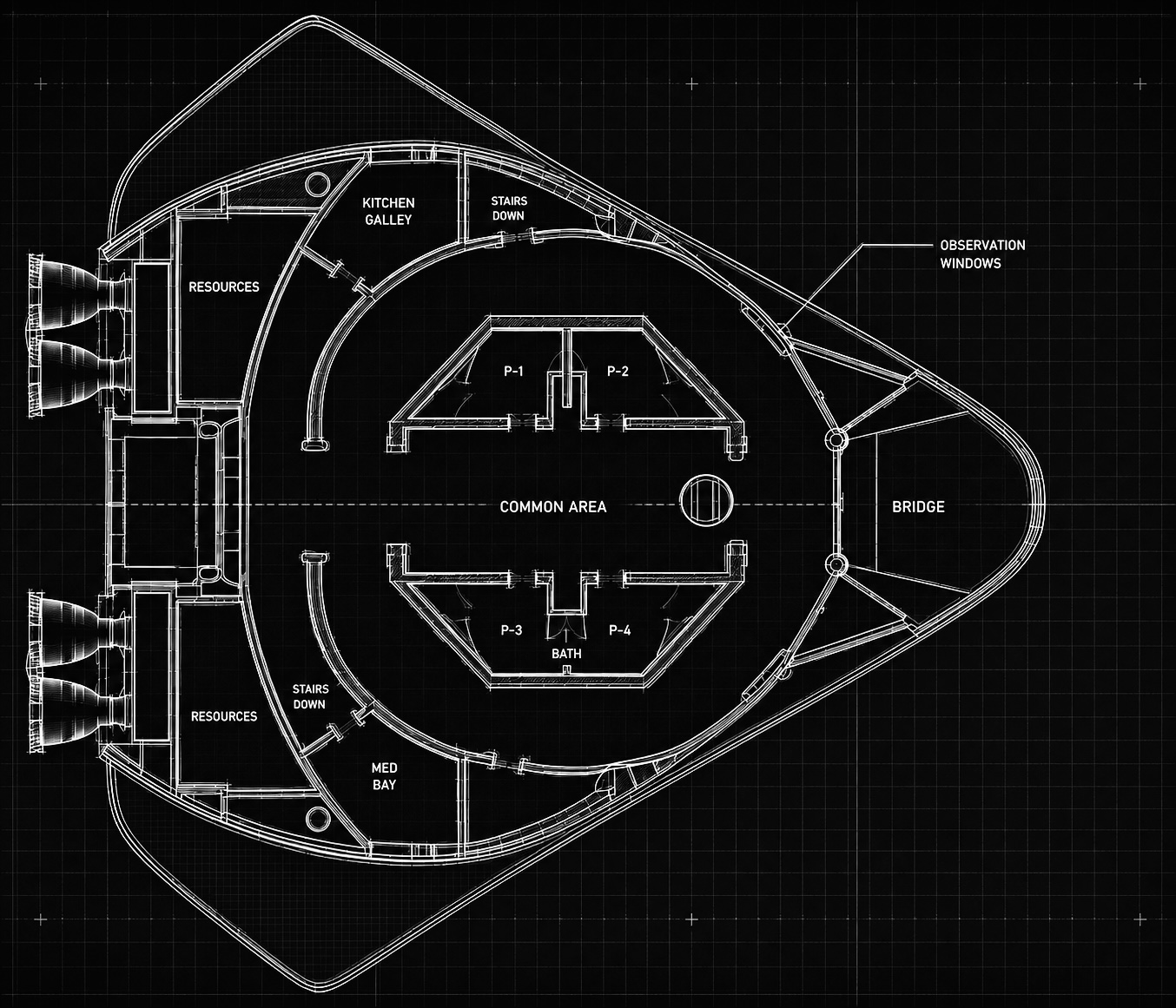
Caelune's three-deck interior separates command, habitation, engineering, and surface operations while maintaining connectivity throughout the spacecraft.
Deck 3 | Flight Deck & Command
The upper level serves as Caelune's primary operational center.
Systems include:
-
Primary flight controls
-
Navigation
-
Mission planning
-
Communications
-
AI interfaces
-
Vehicle-health monitoring
-
External imaging
-
Emergency command capability
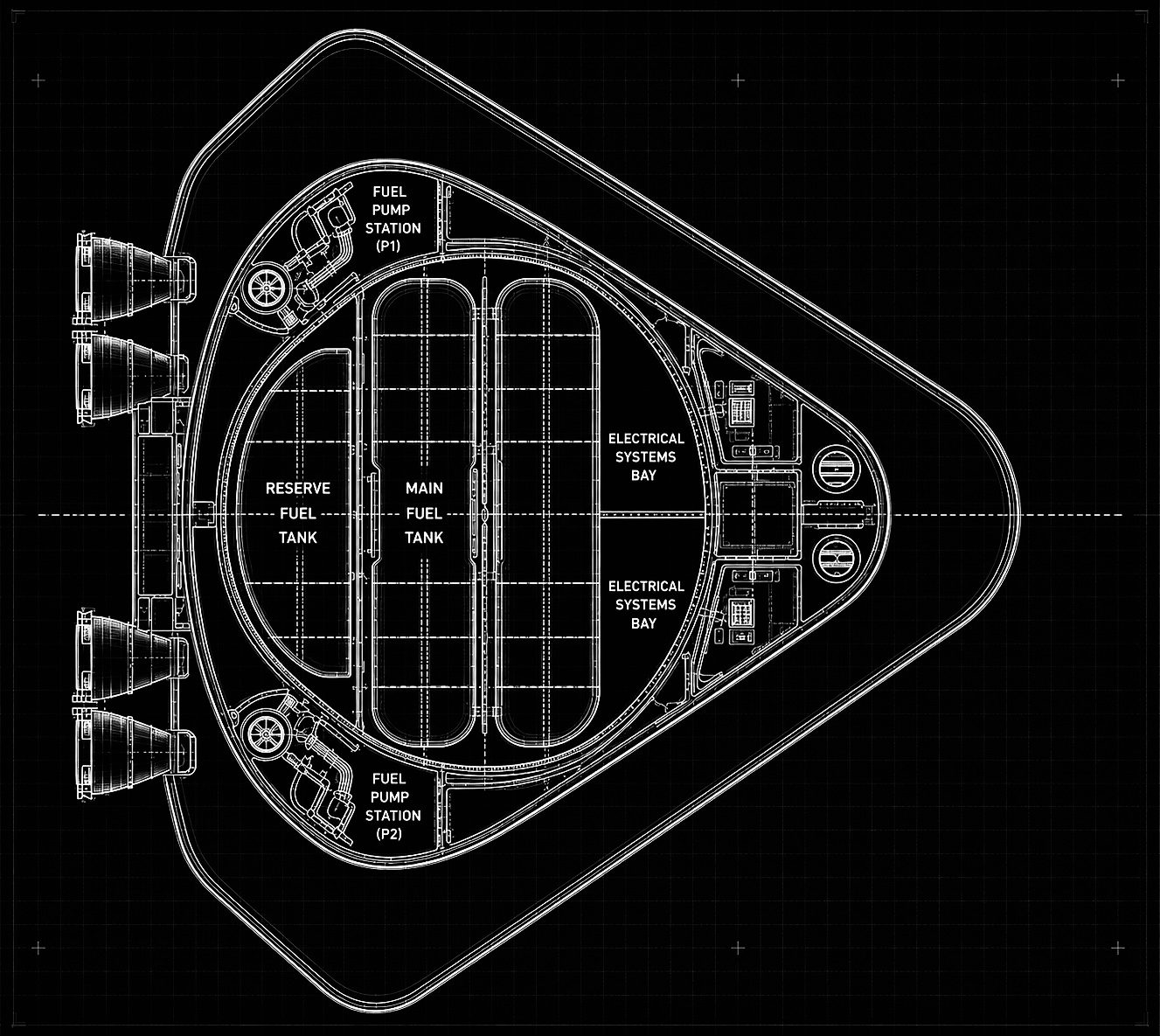
Deck 2 | Engineering, Power & Spacecraft Systems
The protected central level contains many of the spacecraft's critical engineering systems, including:
-
Propellant systems
-
Pumps and valves
-
Electrical distribution
-
Energy storage
-
Flight computers
-
Environmental equipment
-
Thermal management
-
Water processing
-
Propulsion support systems
-
Communications infrastructure
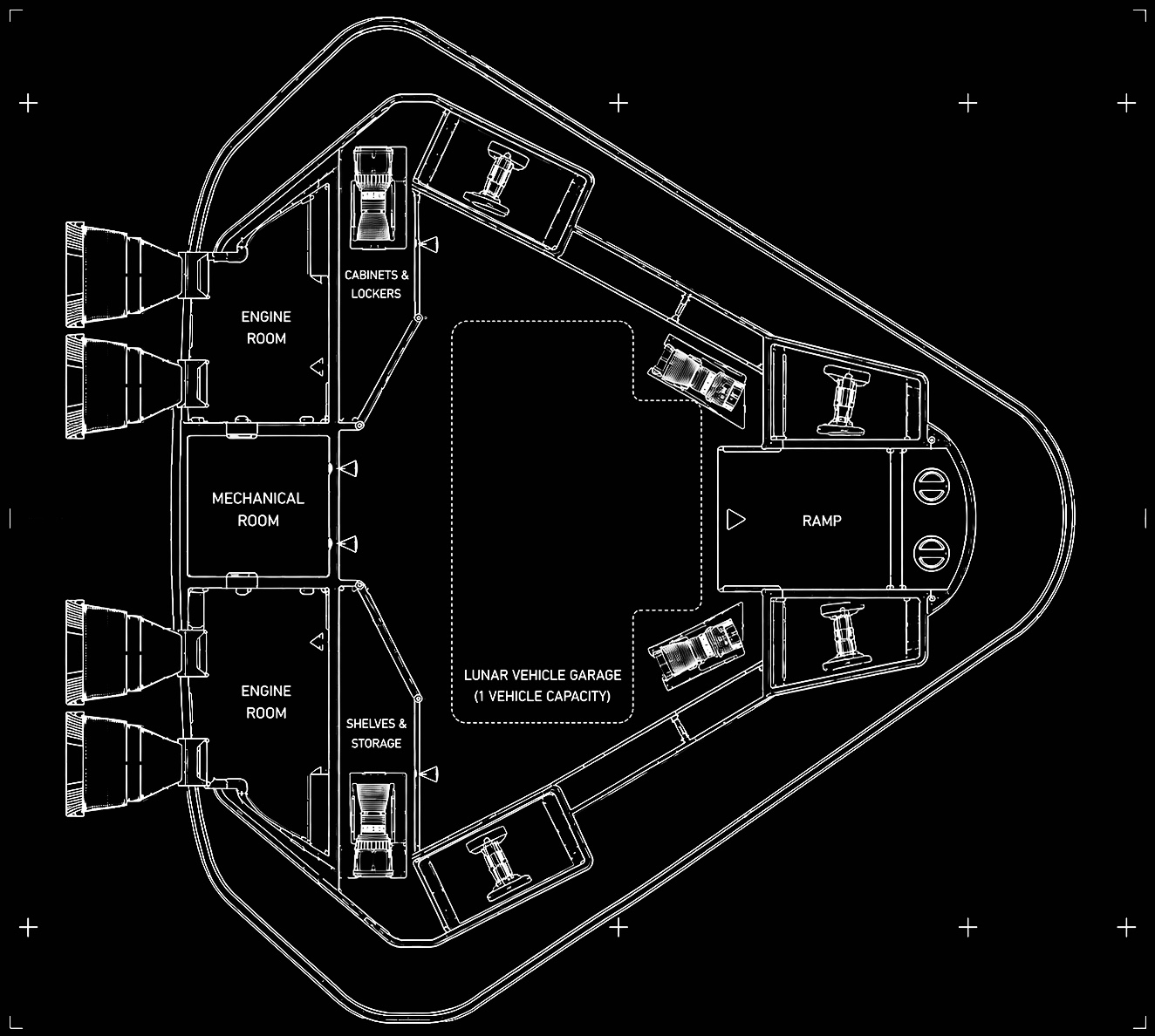
Deck 1 | Surface Operations & Vehicle Bay
The lower level supports cargo and planetary operations with:
-
Mission equipment
-
Robotics
-
Tools
-
Scientific equipment
-
Surface supplies
-
Environmental gear
-
Cargo storage
-
Compact exploration vehicle
-
Integrated surface-access ramp
The result is an interior designed around how the spacecraft is actually used, rather than filling one pressure vessel with unrelated equipment.
06 | HABITABILITY & LIFE SUPPORT
Caelune is designed for continuous occupation over weeks or months rather than short-duration transportation.
Crew Environment
Potential crew spaces include:
-
Private sleeping quarters
-
Galley
-
Dining area
-
Shared living spaces
-
Hygiene facilities
-
Medical area
-
Exercise space
-
Workstations
-
Observation areas
-
Personal storage
-
Mission storage
Environmental Control & Life Support
The ECLSS manages:
-
Oxygen
-
Carbon dioxide removal
-
Cabin pressure
-
Temperature
-
Humidity
-
Water recovery
-
Air filtration
-
Waste processing
-
Atmospheric monitoring
Water Management
Water is treated as a multi-functional spacecraft resource supporting:
-
Crew consumption
-
Hygiene
-
Radiation shielding
-
Thermal management
-
Fire suppression
-
Emergency reserves
Habitability is treated as an engineering requirement, not decoration added after the spacecraft has been designed.
07 | LAYERED SHIELDING & THERMAL PROTECTION
Caelune uses a defense-in-depth structural shielding philosophy in which multiple specialized layers protect the spacecraft from different environmental threats.
Detection & Avoidance
Radar, optical sensors, navigation systems, and available external tracking data identify collision hazards before passive protection becomes necessary.
Sacrificial Impact Protection
Where geometry permits, Whipple-style spaced shielding can fragment hypervelocity debris before it reaches the primary structure.
Composite Impact Protection
Aramid fabrics, ceramic materials, composite panels, and impact-resistant laminates absorb and distribute remaining impact energy.
Primary Pressure Hull
The structural pressure vessel provides the protected boundary required to maintain atmosphere and vehicle integrity.
Water-Integrated Radiation Shielding
Water tanks can be positioned around heavily occupied areas so required mission mass performs a second function as radiation protection.
Hydrogen-Rich Interior Shielding
Polyethylene-based and other hydrogen-rich materials can be integrated into walls, storage systems, sleeping areas, and emergency spaces.
Thermal Protection System
Black hexagonal thermal tiles protect the spacecraft's primary lower heating surfaces during atmospheric entry.
High-temperature protection extends to leading edges and other concentrated heating regions.
The philosophy is simple:
Detect. Avoid. Disperse. Absorb. Shield. Survive.
08 | SAFETY, REDUNDANCY & SURVIVABILITY
Caelune is designed around the assumption that failures can occur without requiring those failures to become catastrophic.
Redundant Critical Systems
Redundancy may be incorporated across:
-
Electrical power
-
Flight computing
-
Navigation
-
Communications
-
Life support
-
Environmental monitoring
-
Propulsion control
-
Thermal management
Compartmentalized Survivability
Pressure boundaries and independent environmental zones allow affected areas to be isolated during:
-
Hull penetration
-
Fire
-
Smoke contamination
-
Pressure loss
-
Electrical failure
-
Atmospheric contamination
-
Localized structural damage
Safe-Haven Protection
A highly protected internal area can provide temporary shelter during elevated radiation events or major spacecraft emergencies.
The safe haven can concentrate:
-
Water shielding
-
Hydrogen-rich protection
-
Emergency oxygen
-
Communications
-
Medical supplies
-
Backup electrical power
-
Environmental monitoring
Fire & Atmospheric Safety
Continuous sensors monitor smoke, heat, pressure, oxygen, carbon dioxide, and atmospheric contaminants. The AI can isolate compartments, modify ventilation, disconnect electrical systems, and preserve unaffected areas. The goal is not a spacecraft where nothing ever breaks. It is a spacecraft designed to remain safe when something does.
09 | POWER, LANDING & SURFACE OPERATIONS
Caelune carries the infrastructure required to transition from an active spacecraft into a self-contained surface base.
Power & Energy Management
The electrical architecture supports:
-
Avionics
-
Flight computers
-
Life support
-
Communications
-
Lighting
-
Pumps
-
Thermal systems
-
Robotics
-
Habitation
-
Surface equipment
-
Propulsion support systems
The AI continuously balances electrical demand, available generation, stored energy, and system priority.
Retractable Landing System
Four retractable landing assemblies provide a wide, stable surface footprint while preserving aerodynamic geometry during flight.
The system accommodates:
-
Vehicle weight
-
Dynamic touchdown loads
-
Uneven terrain
-
Surface irregularities
-
Localized shock loading
Surface Access
The lower vehicle bay and integrated ramp provide direct deployment of:
-
Crew
-
Cargo
-
Exploration vehicles
-
Robotics
-
Scientific instruments
-
Mission equipment
Surface Base Capability
Once landed, Caelune retains its:
-
Life support
-
Electrical power
-
Communications
-
Medical capability
-
Storage
-
Crew accommodations
-
Environmental protection
The spacecraft therefore remains the crew's primary habitat rather than becoming a parked transportation vehicle after touchdown.
10 | EXPLORATION CAPABILITY & CAELUNE PHILOSOPHY
Caelune is envisioned as a reusable platform capable of supporting missions across multiple environments.
Mission Capability
Potential roles include:
-
Earth orbital transportation
-
Orbital research
-
Commercial orbital destinations
-
Cislunar travel
-
Lunar exploration
-
Extended lunar surface missions
-
Crew transportation
-
Cargo transportation
-
Scientific expeditions
-
Remote exploration
-
Surface support
-
Emergency evacuation
